MARINE XII - A World First
A world-first, game-changing offshore operation that pushed the limits of marine engineering, innovation, and collaboration.
Project overview
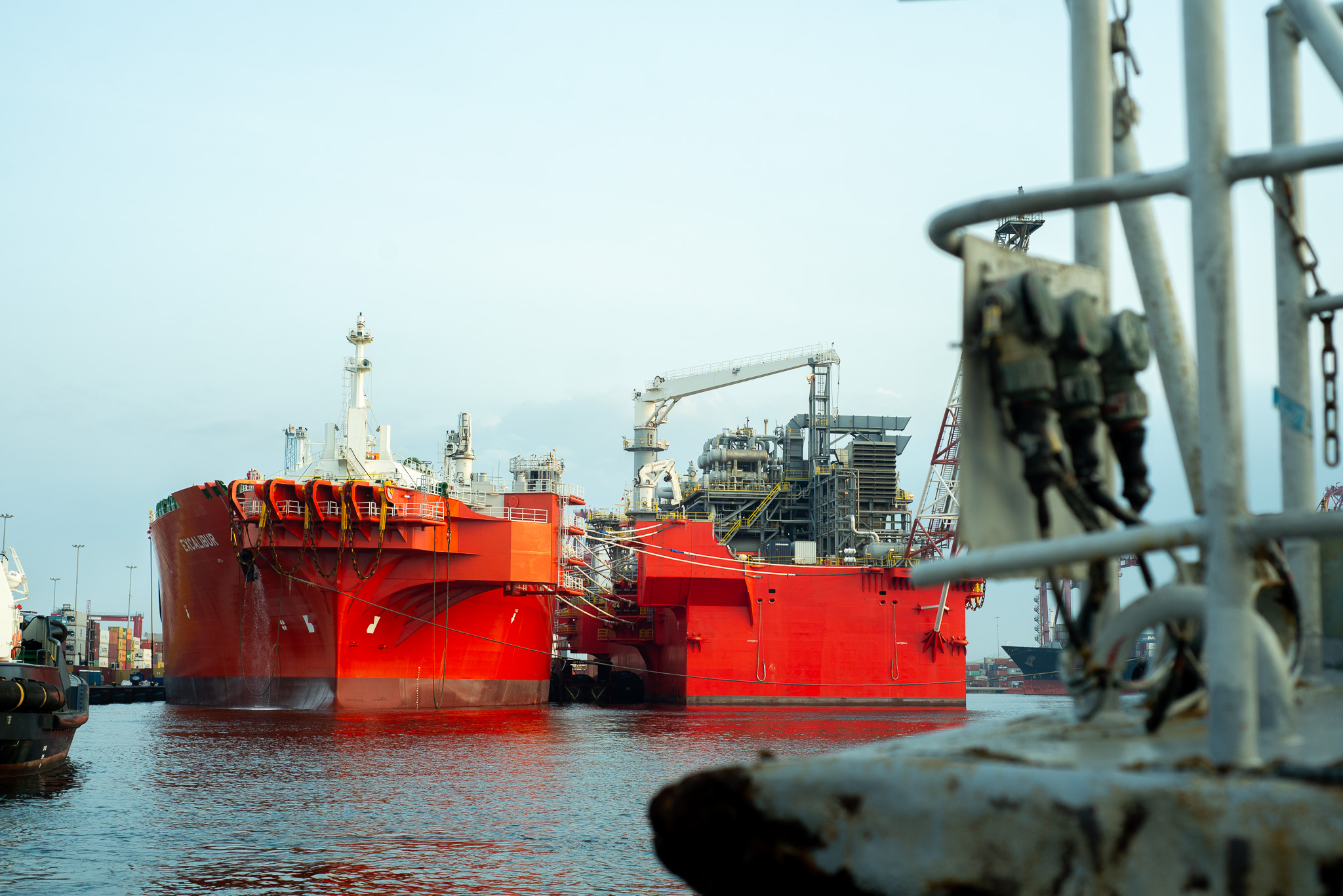
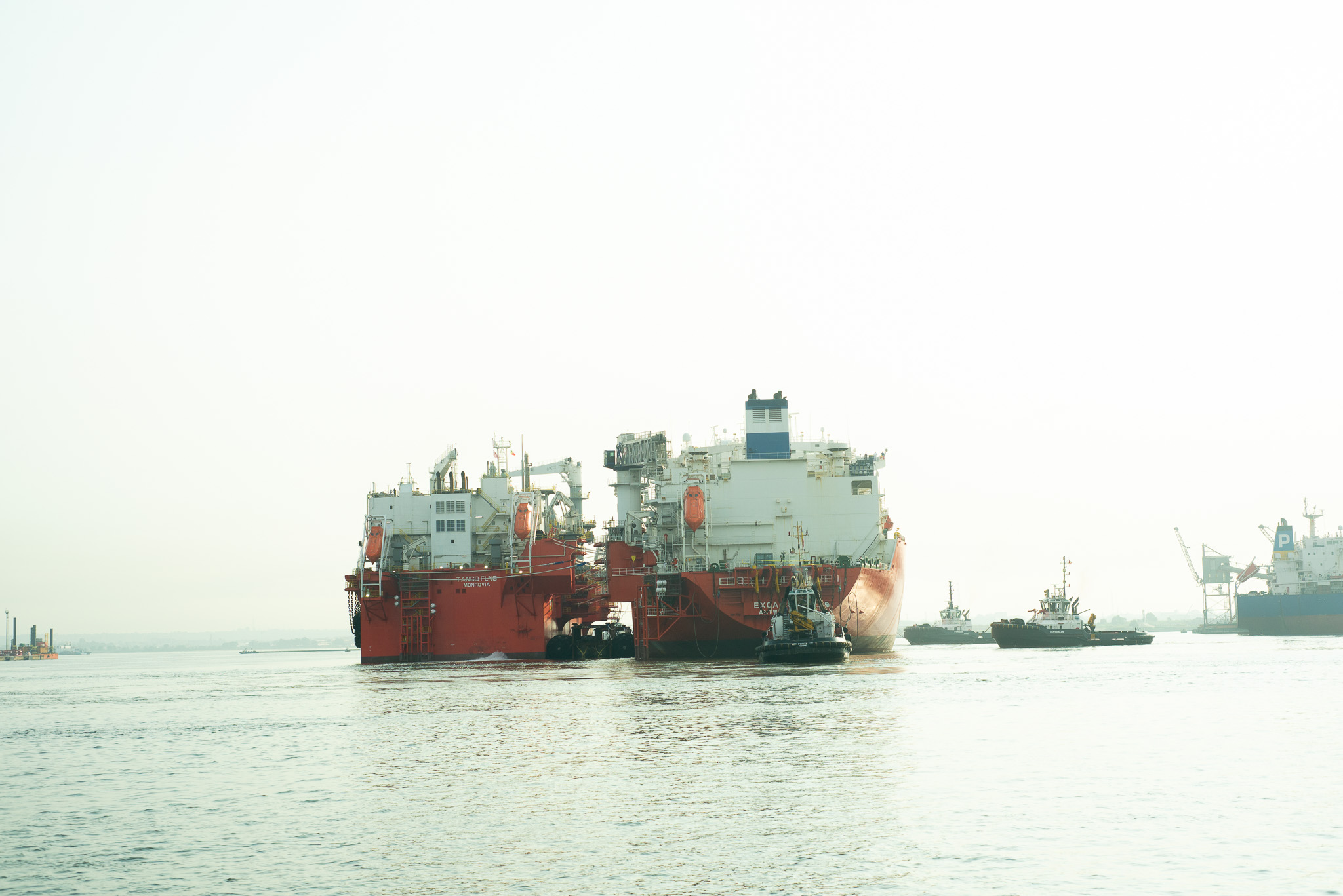
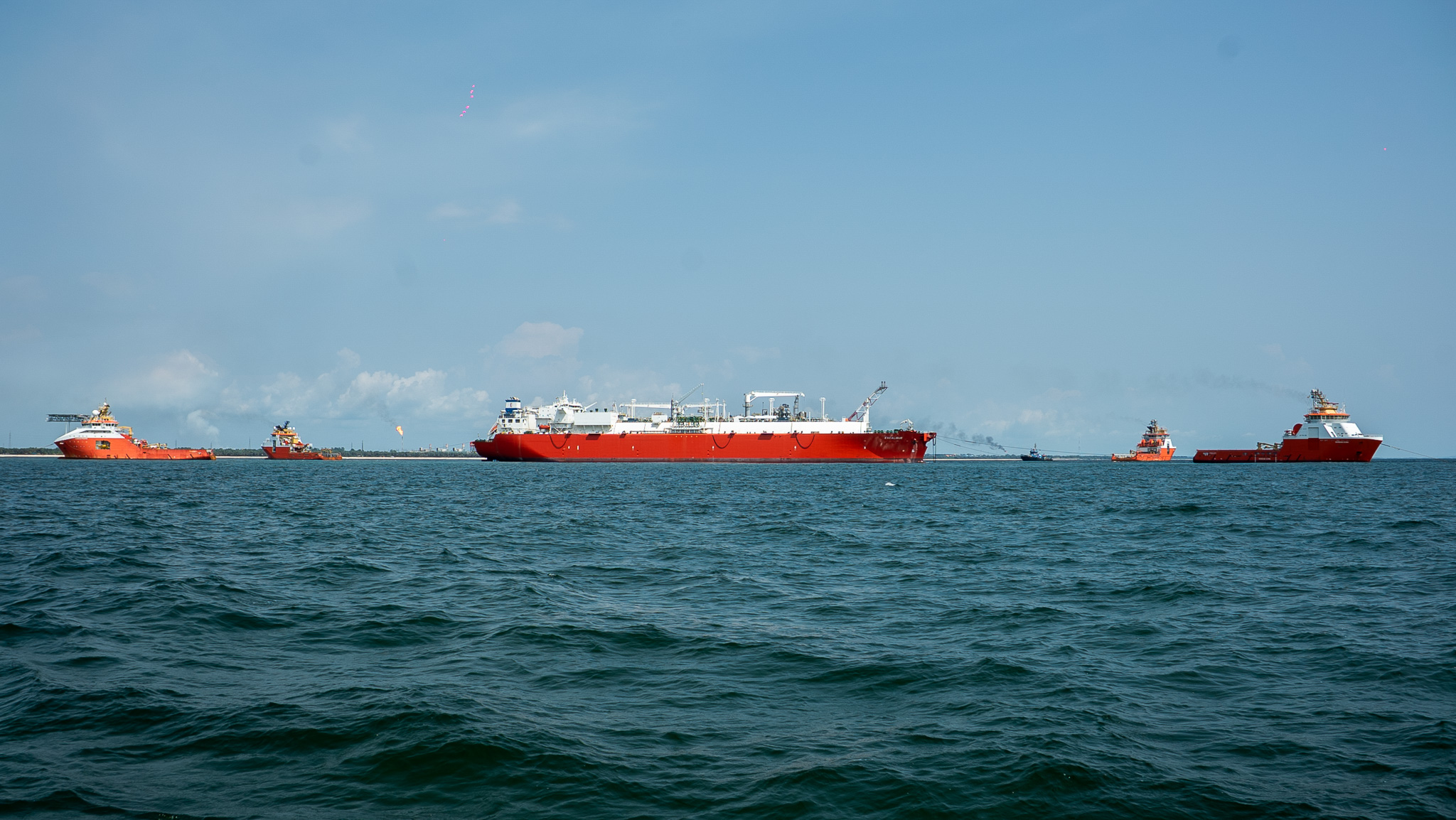
The mission was to tow and moor the 277-meter Excalibur Floating Storage Unit (FSU) and the 144-meter Tango FLNG as a combined unit, offshore and into place – safely, precisely, and under tight deadlines. What Ocean Installer delivered was nothing short of historic.
Rather than conducting a traditional two-step mooring operation offshore – one vessel at a time followed by hazardous interconnections. Ocean Installer proposed a bold alternative: tow both vessels as a connected pair to the installation site and moor them in place in a single operation. They modeled the vessels as a three-body-system, allowing to understand the complex interactions and eliminate potential risks before ever leaving the port. This approach had never been executed offshore and presented major logistical and engineering challenges.
The simulation phase, carried out with support from Kongsberg Maritime, played a vital role. It allowed Ocean Installer’s team to train on exact towing parameters in a virtual environment, preparing them to navigate heading restrictions, vessel dynamics, and environmental conditions – long before the real-world operation began.
Challenges
Originally, the plan called for offshore connection of the 20 nylon hawsers between the FLNG and FSU. However, as simulations progressed, the team identified risks to personnel and equipment, particularly in the challenging Congo coastal environment.
The solution: shift the hawser connection operations inshore, prior to the tow. This crucial pivot ensured a safer working environment and more predictable execution.
One of the most complex aspects of the project was the installation of the split mooring system, a system consisting of:
- 20 interconnecting hawsers between the FSU and FLNG
- 17 mooring lines (9 connected to Tango FLNG, 8 to FSU Excalibur)
- 66-ton StevRex anchors, among the largest ever produced
This required ultra-precise seabed installation and meticulous planning, delivered in collaboration with engineering partners including BV Solutions, Global Maritime, Houlder, and Sealand Projects. Sealand ran the base case offshore analysis, Global Maritime focused on the combined tow dynamics, and Houlder’s hydrodynamic studies ensured structural integrity during the tow, all playing a vital role in testing and validating every element before execution.
Concept to completion in under a year
Another major factor adding pressure to the project was time. What began as a Front-End Engineering Design (FEED) study was fast-tracked into execution in less than 12 months - an extraordinary pace and relentless timeline for a project of this complexity and scale.
Despite the condensed schedule and the complexity of managing multiple subcontractors across several countries, Ocean Installer kept the entire project aligned through tight coordination and continuous communication. They key being unity between all involved parties working as one team with one common mission. This project wasn’t just an achievement for Ocean Installer, it was a milestone for the offshore energy sector and for the Republic of Congo.
By delivering the world’s first two-vessel combined offshore FLNG system installation, Ocean Installer set a new standard for what’s possible in nearshore and offshore LNG development. The successful execution supports Congo’s growing energy ambitions and strengthens LNG ties with Europe, particularly Italy.
Lessons learned
The Congo LNG project proves that even in a high-risk, high-pressure environment, innovative thinking and tight collaboration can yield extraordinary outcomes. Among the lessons learned:
• Simulation is essential
• Flexibility is non-negotiable
• And above all – safety must always lead the way
As Ocean Installer looks toward future challenges, one thing is clear: this team knows how to deliver the impossible. If you want more details on this project, check out the project video: