TORTUE FLNG FENDER REPLACEMENT
Replaced pivot-based method with live offshore replacement. No downtime, no lost LNG exports.
Tortue FLNG Fender Replacement: Live replacement. No lost exports.
When critical infrastructure requires replacement on a live LNG export facility, every decision carries operational consequences.
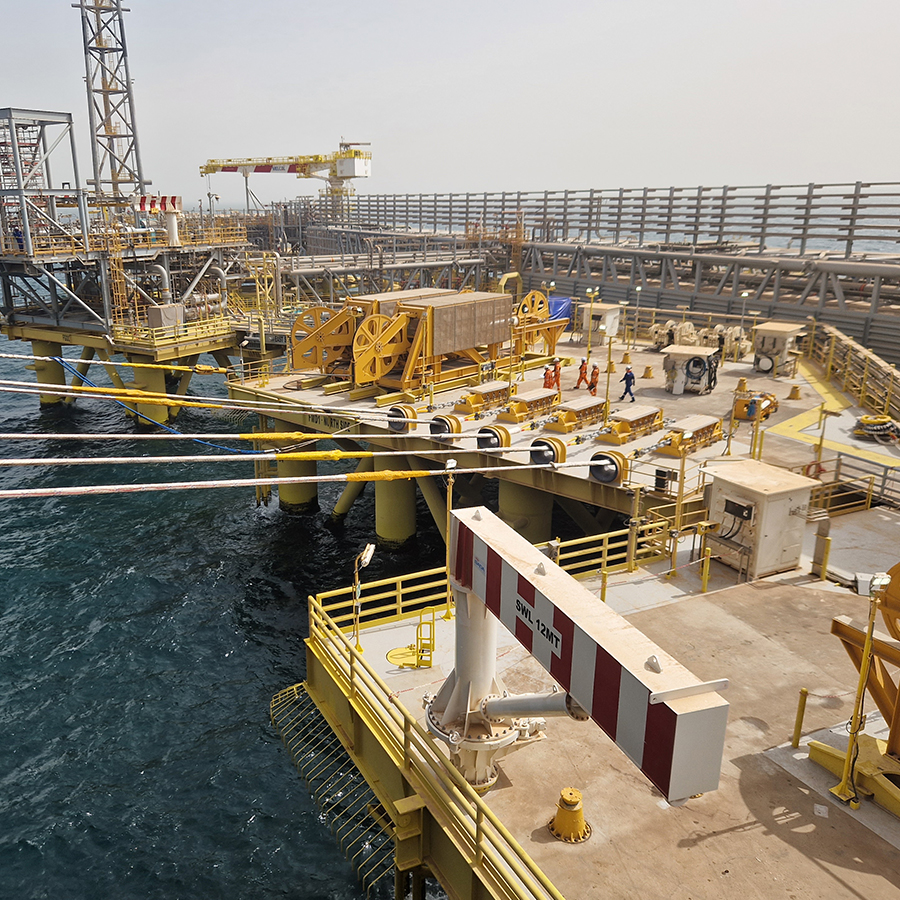
At the Tortue FLNG hub, damaged fenders needed to be replaced while maintaining ongoing LNG export operations. Rather than accepting operational disruption, Global Maritime developed an alternative execution strategy that enabled the work to proceed while the facility remained operational.
The result was a highly complex marine operation completed without interrupting LNG offloading activities.
Challenges
The original replacement methodology required pivoting the FLNG during execution, introducing operational complexity and increasing exposure to downtime.
Any interruption to export activities would have consequences well beyond the scope of the replacement itself. The challenge was to find a safer and more efficient solution while maintaining operational continuity.
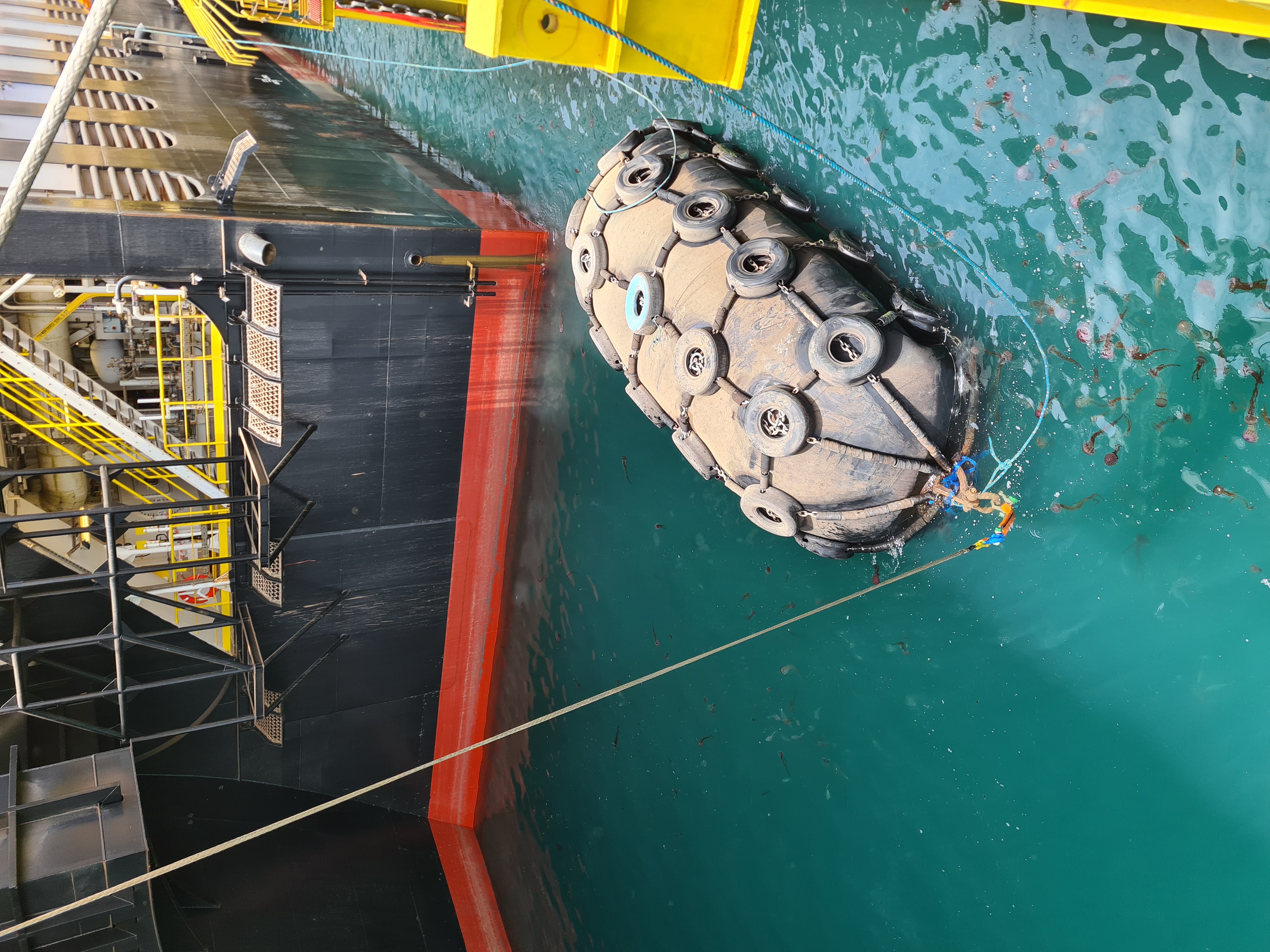
Finding a new way forward
Building on previous involvement in the installation of the mooring system, Global Maritime was able to draw on detailed knowledge of both the facility and its interfaces.
The team developed a replacement methodology that removed the need for a vessel pivot, significantly simplifying execution while maintaining safe operations throughout the campaign.
Engineering, project management, and offshore execution were delivered as one integrated scope, creating full alignment from planning through completion.
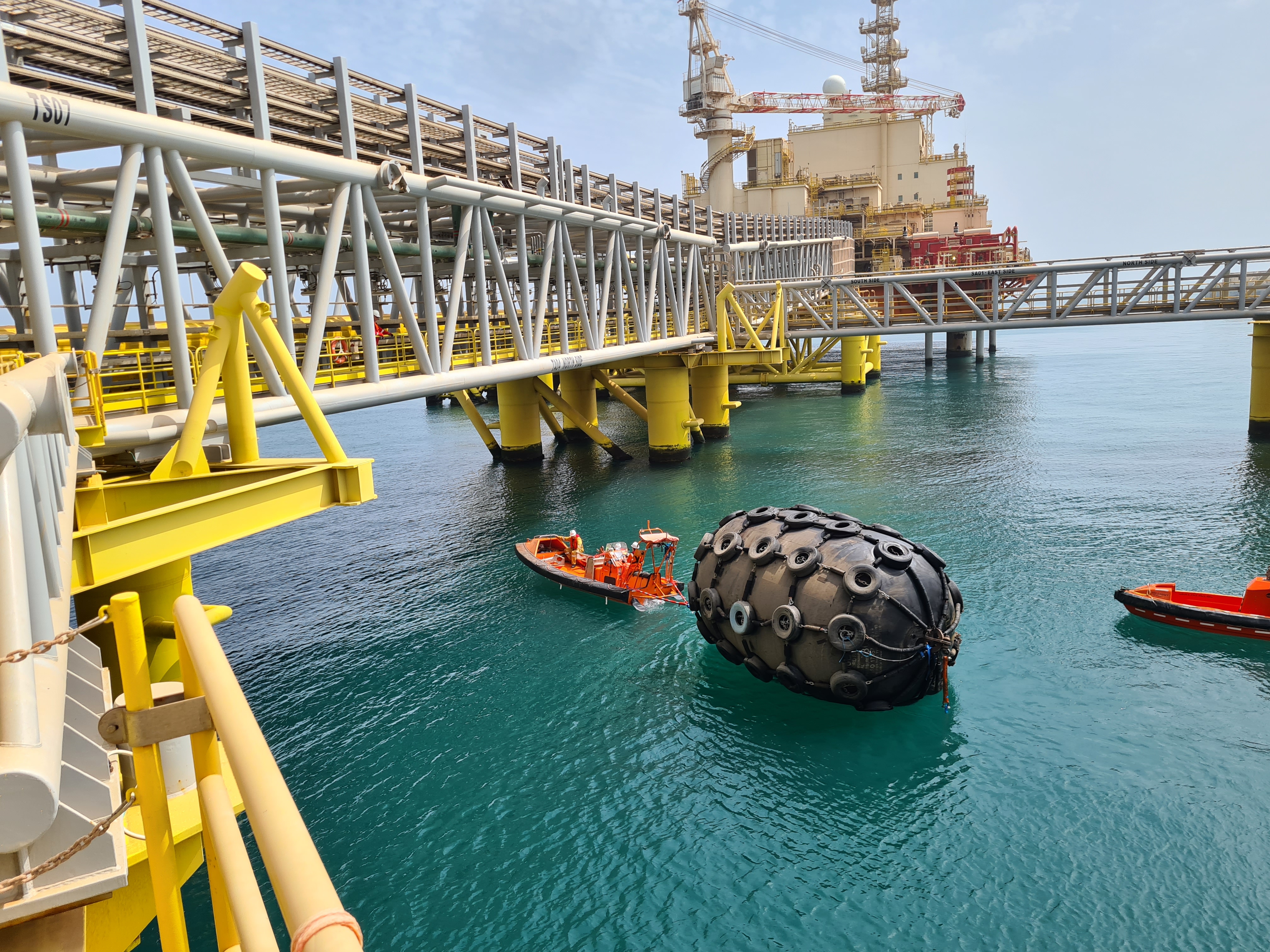
Results
The fender replacement was successfully completed while the FLNG remained operational.
LNG offloading continued throughout the campaign, operational disruption was minimized, and schedule impacts were reduced. The project demonstrated how innovative engineering can protect production while delivering critical infrastructure upgrades.
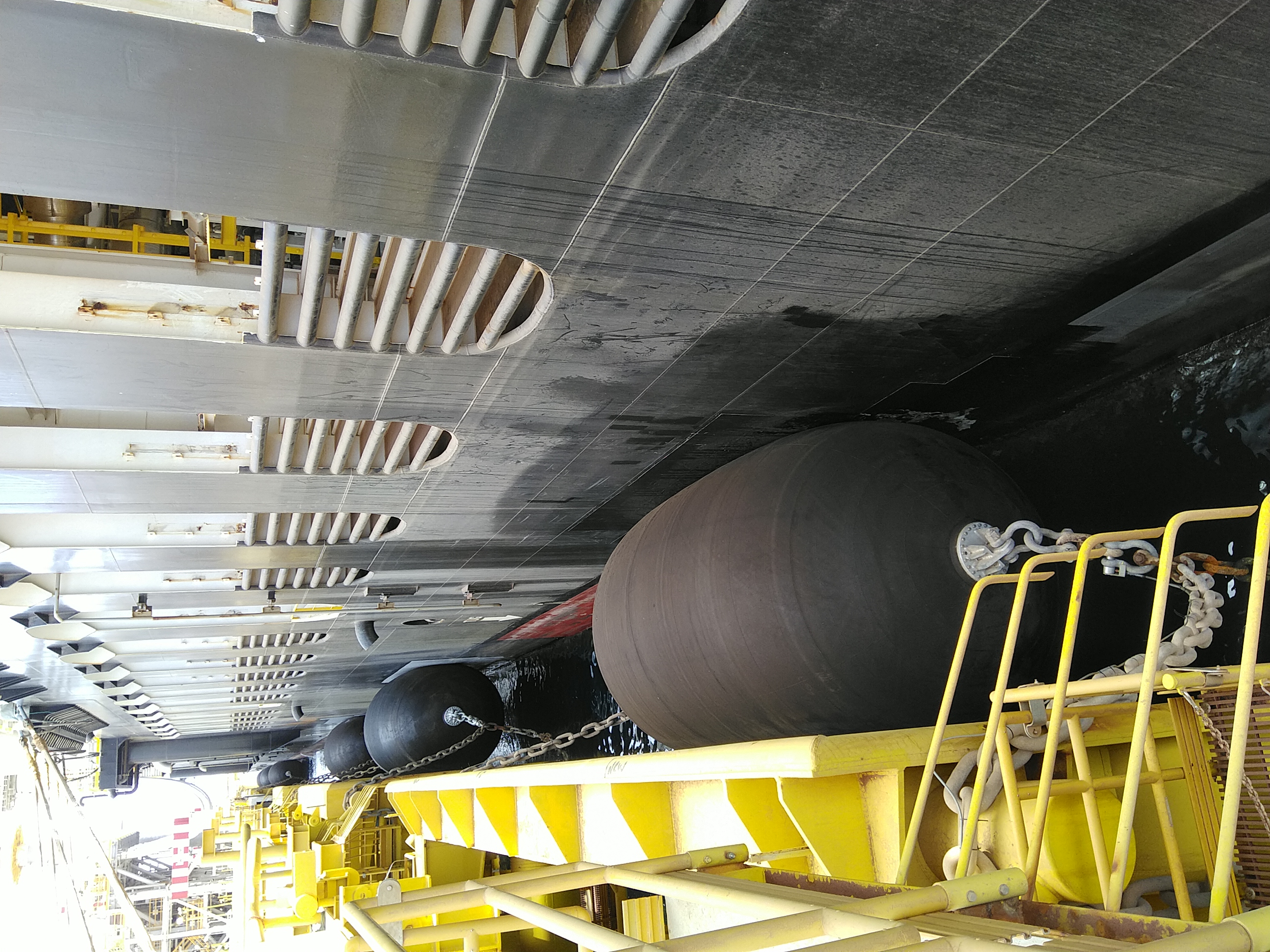
Lessons learned
The most effective solutions often come from fully understanding the operational environment.
By combining engineering expertise with deep asset knowledge, the team was able to develop a method that improved both operational efficiency and execution safety.
The project showed how innovation can create value without interrupting production, even one of the world's most demanding operating facilities.
This is not business as usual.